
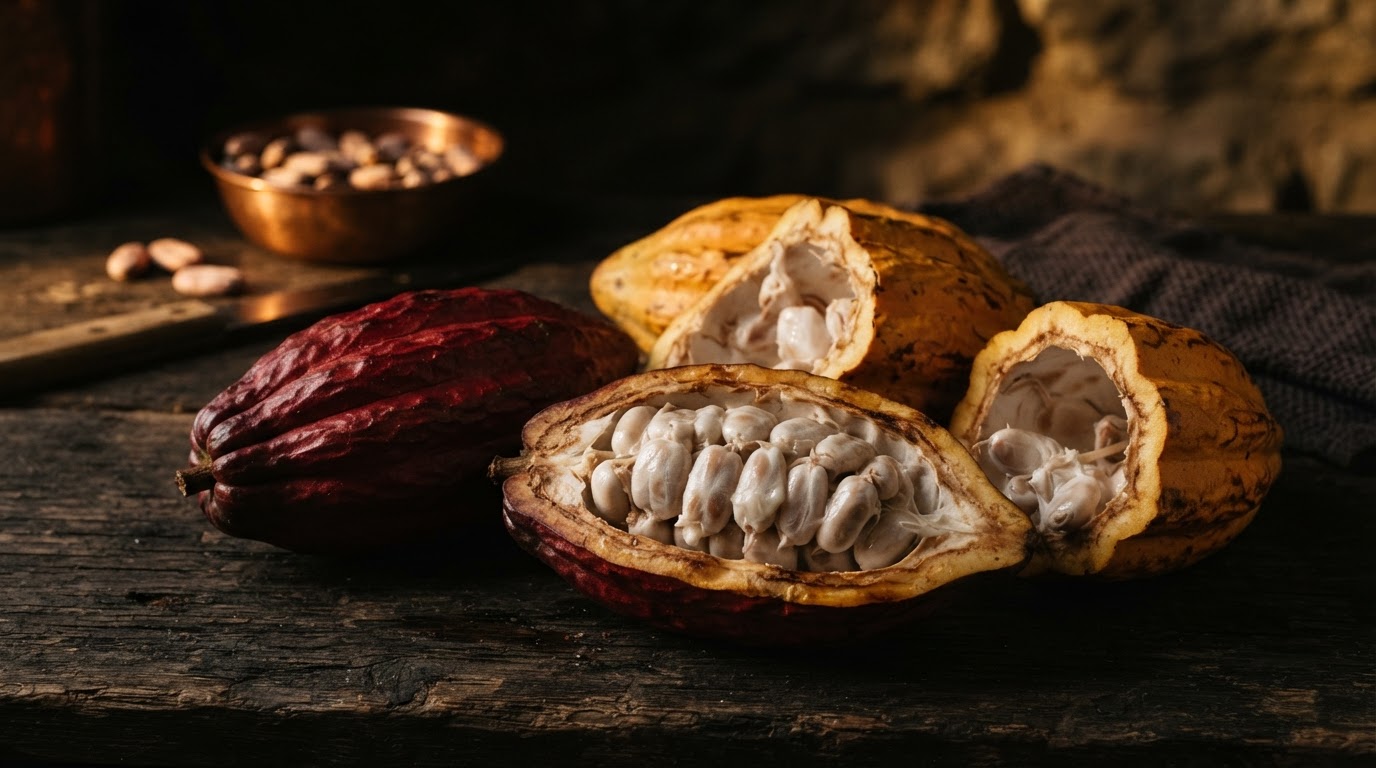
Every great chocolate begins with a single bean — and every great taster begins with a vocabulary. The cacao tasting wheel is the foundational tool that turns vague impressions like "it tastes good" into precise, repeatable observations.
The wheel is organized in concentric rings. The innermost ring holds the broadest families: fruity, floral, nutty, caramel, spicy, earthy, and vegetal. As you move outward, each family branches into more specific descriptors. "Fruity" becomes "citrus," "berry," "stone fruit," and "tropical." "Berry" further resolves into "raspberry," "blackberry," and "cherry."
When you taste a piece of craft chocolate, let it melt slowly on the tongue rather than chewing it. The warmth of your mouth releases the volatile aromatics that define the flavor. Breathe out through your nose — most of what we perceive as "taste" is actually retronasal aroma.
Begin by placing your impression in the innermost ring. Is the dominant note fruity or earthy? Then move outward. A Madagascar cacao will often land squarely in the berry and citrus quadrant, while a Venezuelan bean may reveal caramel and nut undertones. There is no wrong answer — only the honest record of what your palate detected.
Keep a tasting journal. Over weeks and months, you'll notice your wheel annotations becoming more specific and consistent. This is the muscle the Chocolate Sommelier Certification trains, and it is the same skill used by professional graders at cacao competitions around the world.